
Learning to Live After Almost Dying
What surviving taught me about returning to the places that once broke me.

There are experiences that have divided my life into before and after.
When I met each of my children for the first time. The moment I finally walked away from the person I thought I couldn’t live without.
And the time my body became a story I couldn’t fully explain—when something invisible and microscopic forced me to surrender everything I thought I controlled.
For me, that dividing line came in a hospital room, under the bright, indifferent lights of modern medicine, with a diagnosis I could barely pronounce: necrotizing fasciitis.
The words felt foreign, unreal, like a plotline that belonged to someone else’s life.
I didn’t feel pain, at least not in the physical sense. What I felt was shock. Disbelief. The surreal awareness that something inside me had gone terribly wrong—and yet I was awake, lucid, calm.
Almost too calm, as if some part of me already knew I’d be changed by this, whether or not I survived.
When I finally left the hospital after two weeks, everyone said how lucky I was. And I was. But luck doesn’t quiet the nervous system.
For a long time afterward, my mind replayed every detail—the moment I first noticed the swelling, the black crater that quickly grew on my calf, the six-hour drive to the hospital, the sterile walls.
Even as my body healed, I could feel how close I’d been to the edge. The memory of that proximity never really left; it simply changed shape.
Now, months later, I find myself hesitating to return to the jungle—the place that once felt like pure aliveness.
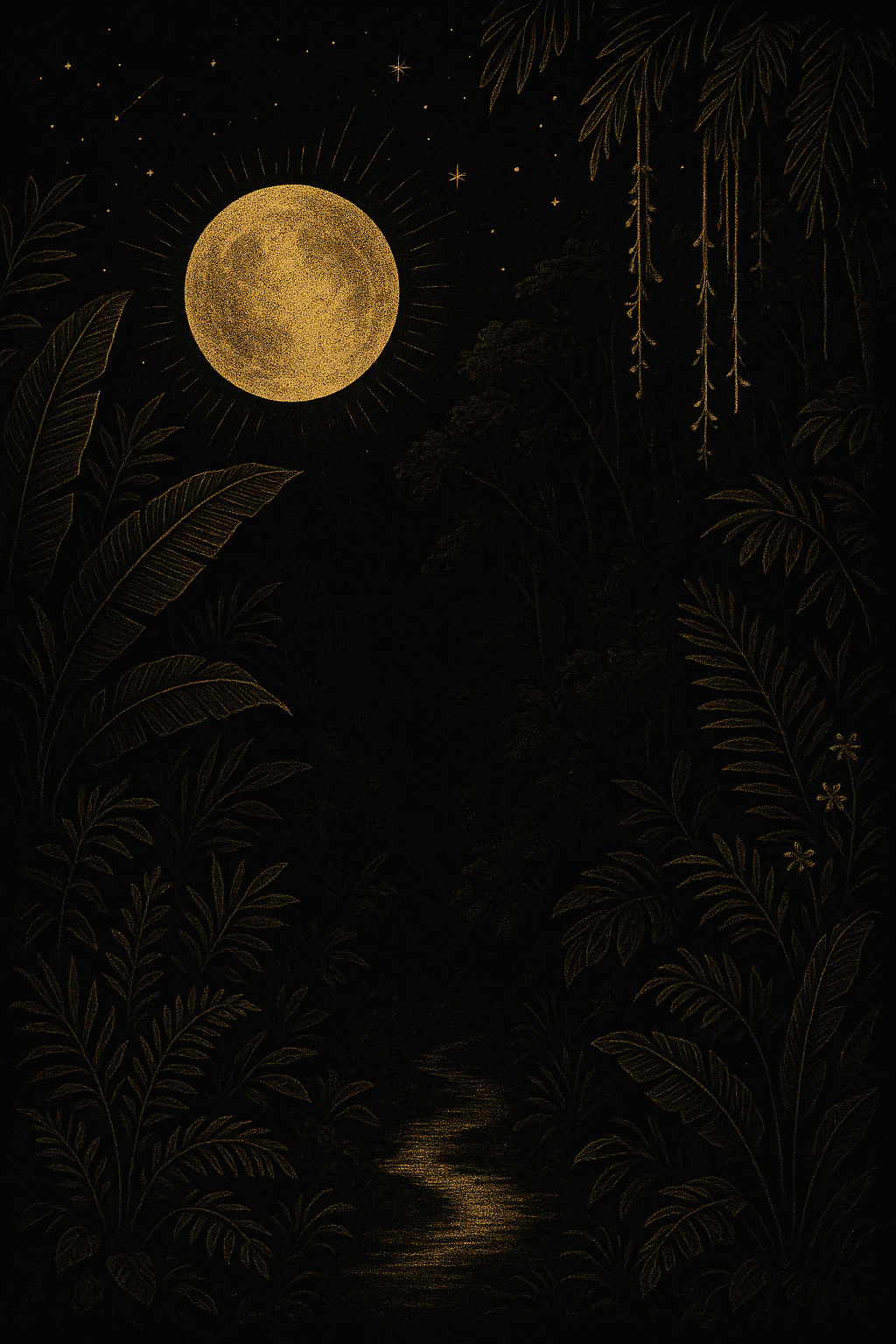
The doctors told me I could have contracted the bacteria anywhere: a city street, a hotel, even a mosquito bite in the suburbs. They said it probably didn’t come from bathing in the creek or sleeping in a tent on the edge of Corcovado National Park.
But there’s no way to ever really know.
And the jungle, as much as I love her, is not a place where you can avoid open skin.
Every day brings new scratches, bites, tiny wounds—doorways, really, through which life and danger both can enter.
That’s the paradox I live with now: the very landscapes that feed my spirit could also threaten my body.
I’ve been coaching myself through that truth. It’s the same kind of work I guide others through when they’re trying to trust life again after a rupture.
You are safe right now.
The fear is old information.
You don’t need to control everything to stay alive.
Sometimes I wonder if the jungle is simply asking me to meet her differently now.
Not as the fearless adventurer who dives in barefoot, but as the woman who knows what it costs to come back.
Maybe this is what integration really looks like—returning to what you love, but with reverence instead of recklessness.
Letting curiosity coexist with caution.
Letting wonder make room for wisdom.
Healing from almost dying isn’t about transcending fear. It’s about learning to hold it gently, without letting it make all the decisions.
I used to think healing meant “getting back to normal.” Now I understand it’s an ongoing relationship—a dialogue between the body and the soul. Between the parts of me that long to return to the wild and the parts that whisper, Not yet.
And that’s okay.
Some thresholds take time to cross again.
Some doors are meant to stay half open until the light changes.
There’s a quiet wisdom that comes from nearly dying and then living on.
The world looks the same, but you don’t.
You see how fragile it all is—and how miraculous.
I used to believe survival meant I had to make the most of every moment.
Now I see it differently. Survival gave me permission to live more slowly. To listen more closely. To choose what actually feels alive, instead of what simply fills the space.
And maybe that’s the deeper healing: realizing that safety doesn’t only come from controlling the outer world. It also comes from trusting the inner one.
That trust is what I’m rebuilding, breath by breath.
That’s the quiet work no one sees.
The work of teaching my body that it’s okay to dream again.
Even of the jungle.
Invocation: Ixchel, the Mayan Goddess of Healing and the Moon
She who governs both creation and decay,
teach me to trust the cycles of my own becoming.
Let the same waters that once frightened me
now cleanse and renew me.
Help me remember that healing is not avoidance—
it’s the art of returning, in divine timing, to what I love.
If you’re standing at your own threshold—recovering from illness, heartbreak, or simply becoming someone new—know that you don’t have to walk through it alone.
As a Transition Doula, I hold space for the in-between: the moments when the old self has fallen away, and the new one is still forming.
Through guided reflection, intuitive dialogue, and grounded spiritual practice, I help you meet change as sacred initiation—one that asks not for perfection, but for presence.
You can learn more or book a session at www.goddessintraining.online — a space devoted to helping you trust the transition, and return home to yourself.
If this story resonated with you, consider becoming a paid subscriber to support the deeper layers of this work. Your subscription helps sustain the essays, audio reflections, and Intuition Growth Lab prompts I share each week.
And if now isn’t the time to upgrade, but this piece touched something in you, you can always buy me a cacao as a way of saying thank you and helping to keep this creative portal open.

Thank you for sharing this Sarah. What you wrote about healing, moved me.
Thank you for sharing this piece. I associate Ixchel with fertility, and this renewal you speak of is a new rebirth for you. Amazing. Keep on going. 💖